| Genre: | Comedy, Drama |
| Year: | 1963 |
| MPAA Rated: | TV-PG |
| Viewer Rating: | |
| IMDB Rating: | 7.5 |
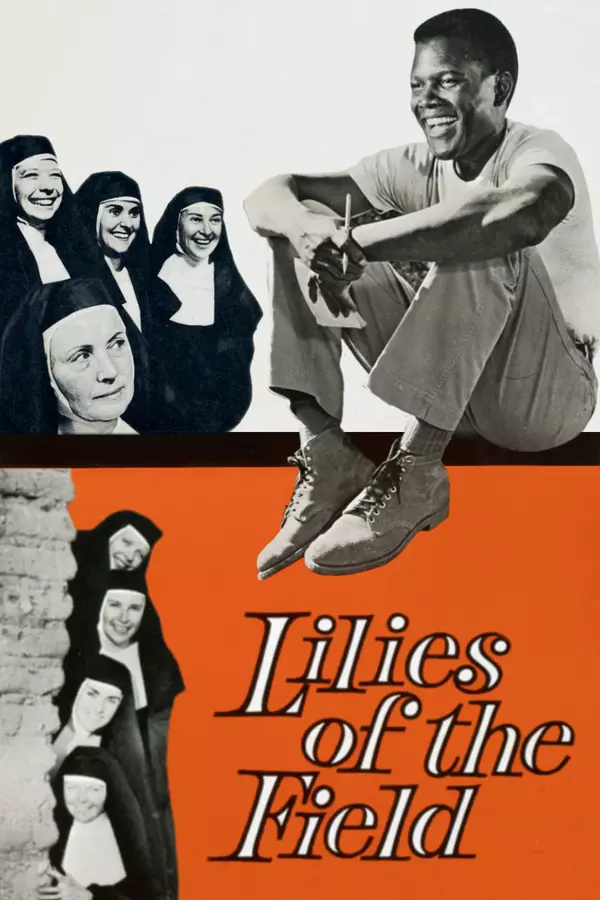
Directed by Ralph Nelson and adapted from William E. Barrett’s acclaimed novel, Lilies of the Field (1963) is a timeless, heartwarming, and culturally groundbreaking American cinematic masterpiece that celebrates the power of human connection, faith, and unexpected cooperation. The story follows Homer Smith (Sidney Poitier in an iconic, barrier-breaking lead performance), an easygoing, itinerant traveling handyman and former U.S. Army veteran who is driving through the arid, sun-baked desert of Arizona in his battered station wagon. While stopping briefly at a remote rural farm to refill his car’s radiator, Homer crosses paths with a tight-knit community of five East European refugee nuns led by the unyielding and fiercely devout Mother Maria (Lilia Skala).
Mother Maria immediately views Homer’s arrival as a divine intervention, believing he was sent by God to construct a much-needed chapel for their impoverished parish. Though Homer initially intends to collect his wages, grab a quick meal, and drive away, he finds himself gradually drawn into the arduous, volunteer project. Working entirely under the hot desert sun with meager supplies, Homer and the sisters forge an extraordinary cross-cultural friendship that transcends language barriers, religious differences, and social divides. Blending gentle humor, quiet dignity, and profound humanist grace, the film stands as an enduring triumph of independent American cinema.
What Makes This Movie Special
- Sidney Poitier’s Historic Academy Award Win: Sidney Poitier delivers a mesmerizing, charismatic lead performance, making history by becoming the first African American actor to win the Academy Award for Best Actor.
- Lilia Skala’s Powerful Foil: Austrian actress Lilia Skala brings fierce intelligence, maternal warmth, and stubborn devotion as Mother Maria, forming one of the most memorable cinematic duos in film history.
- A Profound Humanist Message: Eschewing heavy melodrama, the script focuses on quiet acts of charity, mutual respect, and the universal bridges built through shared labor and kindness.
- A Landmark Independent Production: Produced on a modest budget by Ralph Nelson, the film proved that deeply thoughtful, low-key humanist narratives could achieve massive commercial and critical acclaim.
Why You May Like This Movie
- You love uplifting, character-driven classic masterpieces that prioritize heart, dignity, and brilliant lead performances over Hollywood spectacle.
- You appreciate wonderful cinematic collaborations between legendary actors like Sidney Poitier and Lilia Skala.
- You enjoy comforting, inspiring stories centered around building communities, overcoming odds, and forming unexpected friendships.
- You seek out legendary cinematic milestones that left an indelible mark on American film history and cultural representation.
Fun Facts
- Sidney Poitier famously took a percentage of the film’s low box office profits instead of his standard upfront salary because the indie production had a severely restricted budget, a gamble that paid off enormously when the movie became a massive box-office hit.
- The film’s iconic title is derived from the famous passage in the Sermon on the Mount: “Consider the lilies of the field, how they grow; they toil not, neither do they spin.”
- Director Ralph Nelson personally financed part of the production out of his own pocket when studio executives hesitated to back a quiet, black-and-white drama about a Black handyman and a group of nuns.
- The chapel built during the film was constructed on location in Tucson, Arizona, and became a local landmark heavily visited by cinephiles and fans of the movie for decades following its release.